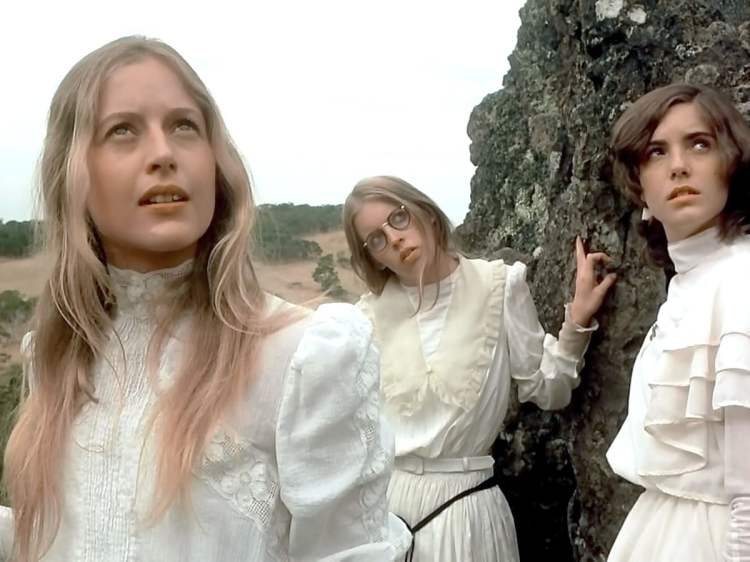
Peter Weir’s 1975 masterpiece, adapted from the novel by Joan Lindsay, has baffled successive generations by letting the viewers work out if the story was true for themselves. It definitely wasn’t, but the notion that it could be only added to its everlasting allure.
In Valentine’s Day, 1900, three young college girls and their governess go missing at the local beauty spot, Hanging Rock in Victoria. They gaze up, wander off, and then just vanish into thin air, and no trace of them is ever found. They leave nothing behind: no clothes, books, gloves or parasols. The police are perplexed, Appleyard College even more so. It haunts everyone involved for the rest of their lives.
The cast are wonderful: Anne- Louise Lambert as the distrait, beautiful Miranda; the formidable Rachel Roberts as outspoken, steely Mrs Appleyard, Jane Vallis as naive Marion, and Jenny Lovell as antagonist Blanche. The blanched- out cinematography by Russell Boyd is lovely, framing the young women in luminance, rendering the look of the film like a Renaissance painting. Images linger long after the film is seen.
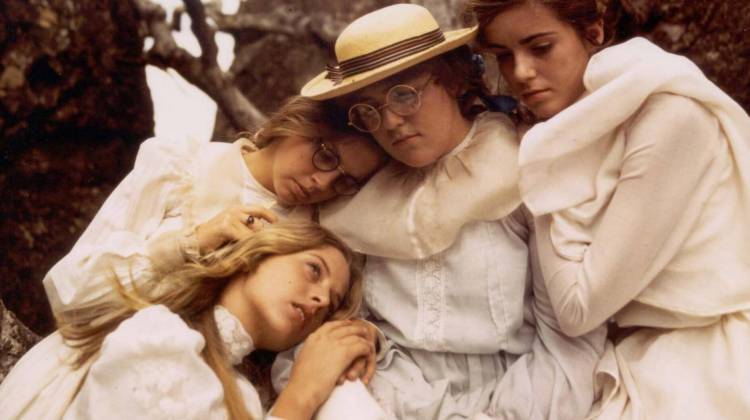
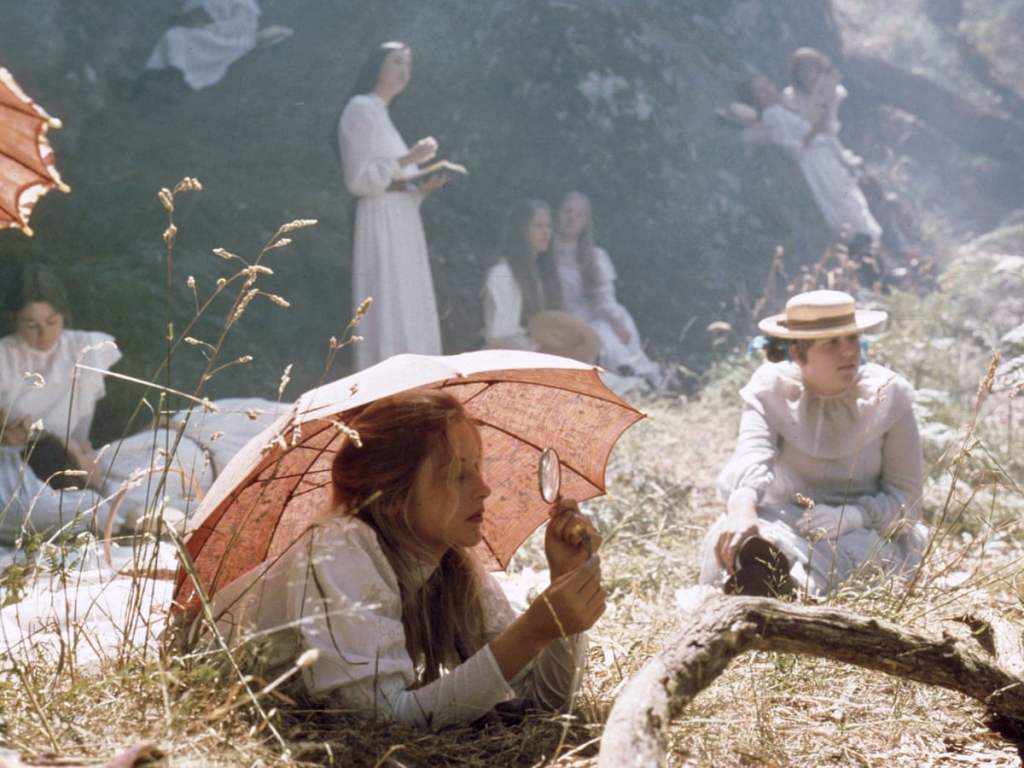
Many films have in recent years taken their inspiration from this: ‘The Falling’ by Carol Morley, ‘A Field In England’ by Ben Wheatley, ‘Midsommar’ by Ari Aster and of course Sofia Coppola’s peerless ‘Virgin Suicides’.All contain ambiguity about human motivation and a hallucinogenic quality.
The uncanny feeling is heightened by a sense of incompleteness, of unspoken thoughts hanging like haze in the air. It’s this elusive quality which lends such potency to the film, like a riddle which can never be solved. Essentially, it feels like Alice in Wonderland, now older, never came back. It’s gothic, disturbing, yet somehow eerily beautiful: ideal for the dark nights ahead.

