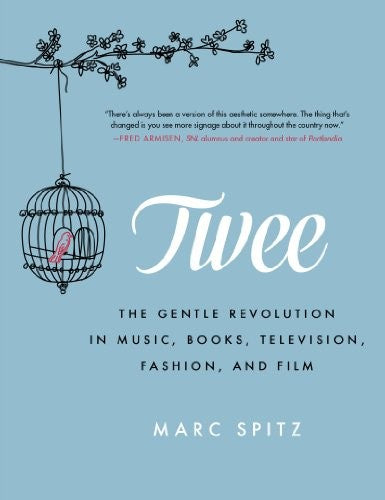
Marc Spitz was a fine writer, and it’s clear he had an eye for the vagaries of pop culture, but Twee didn’t always convince me. What he described wasn’t a tribe, but an aesthetic. This would have been okay, were it a style guide (he was no stranger to a cute bow tie and fifties specs himself) but some of the choices he made in this book merely baffled me. Weren’t they just hipster culture really, if we have to pin a definition or label to all this?
On The Pastels, Postcard Records and Pee Wee Herman, absolutely: we can agree on their tweeness. The gentle end of indie music, film and TV was epitomised by the likes of those three. Likewise cardigans, hair clips, Wes Anderson and Zooey Deschanel. I laugh when I think of a rare example of SNL being funny (hasn’t happened in a long time) parodying Deschanel and Michael Cera in a segment titled ‘Bein’ Quirky’ (Bjork wasn’t quite portrayed with accuracy, though, and she’s not strictly twee) – all big eyes, baking and vintage threads.
It’s just that some of his examples fall wide of the mark. French Nouvelle Vague influenced Belle and Sebastian, undoubtedly, but in and of itself, I don’t think Godard et Truffaut were so soft and sweet after all. They epitomised iconoclastic film approaches, libertarian politics, depicting crime and sexual liberation. Twee seems to reject anything blatantly political or sexually charged. Yet Spitz waxes lyrical on their seemingly twee credentials.
For example, was Edward Gorey twee? Psychedelic rock? John Hughes? The Smiths, even? Surely there was too much in the way of death, humour and social anxiety bubbling under. If twee is, as he suggested, a sort of refusal to grow up, artists who tackle violence and cynicism seem to be the antithesis of that.
Many others he deconstructed in this book indeed left me wondering how he made such tenuous connections. Todd Solondz- really? The man who finessed adolescent misery and threatened a female teen protagonist in one of his films with rape? That’s more realistic, surely. Some of his arguments for the twee aesthetic leave me wondering what the criteria was, after all. There’s nothing cutesie or reassuring in rape culture, or the acknowledgement of it in drama.
The enthusiasm and knowledge of his pop culture was impressive. I just felt a little short-changed by some of the through- lines within the book. There were some interesting ideas, but quite a few startlingly awkward and disingenuous arguments.
Ironically, a few years after he finished the book, and several years after his passing, tweecore came along, reawakening the C86 style and reigniting a love of all things arts and crafts, vintage and childishly nostalgic. He may have been prescient after all.
 Hit The North
Great review! This was a really interesting analysis you have saved me the effort of reading it. Yes I always thought twee was just another name for hipster, but predates this. Fascinating….thank you
LikeLike