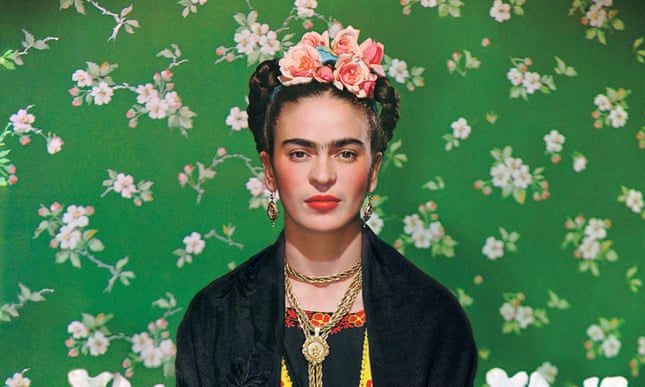
We all know Frida Kahlo: survivor of polio, and a terrible bus crash; flowers in her hair and autobiographical art, married to Communist and prolific artist Diego Rivera, twenty years her senior. These are merely outlines, bare sketches. Louise Lockwood’s exhaustive three part BBC documentary films fill in the colours.
There are details from her great-niece Cristina and various art historians, all of whom bear witness to her indefatigable spirit in the wake of her aforementioned struggles, plus living through miscarriages, Rivera’s affairs (most notably, horrendously, with her sister) and the selling -out of Rivera- he accepted patronage from Rockefeller to paint a giant mural in one of their vast buildings.
So Kahlo, initially cast as rebel and almost rock star, is celebrated, and rightly so, for her incredible, timeless art and strength. But what emerges is her voice, and with that, a patina of vulnerability, as we hear letters to her family, Rivera and her lovers, including Georgia O’ Keefe and Andre Breton, the latter of whom praised her work as “true Surrealism”.

A trip from her native Mexico to the United States was something of a disappointment to Kahlo and Rivera. Newlywed, they found the American Dream littered with decay and poverty on an unprecedented scale, and were shouted at and criticised at every turn. An irony then, that today, Kahlo’s art fetches millions in the American market.
What the films manage to do so beautifully is draw out an intimate, humane portrait of Kahlo without prurience or fangirling. It’s vivid, raw, often heart -breaking, but never cliched – much like the artist herself.
Available to watch on BBC I Player.
 Hit The North