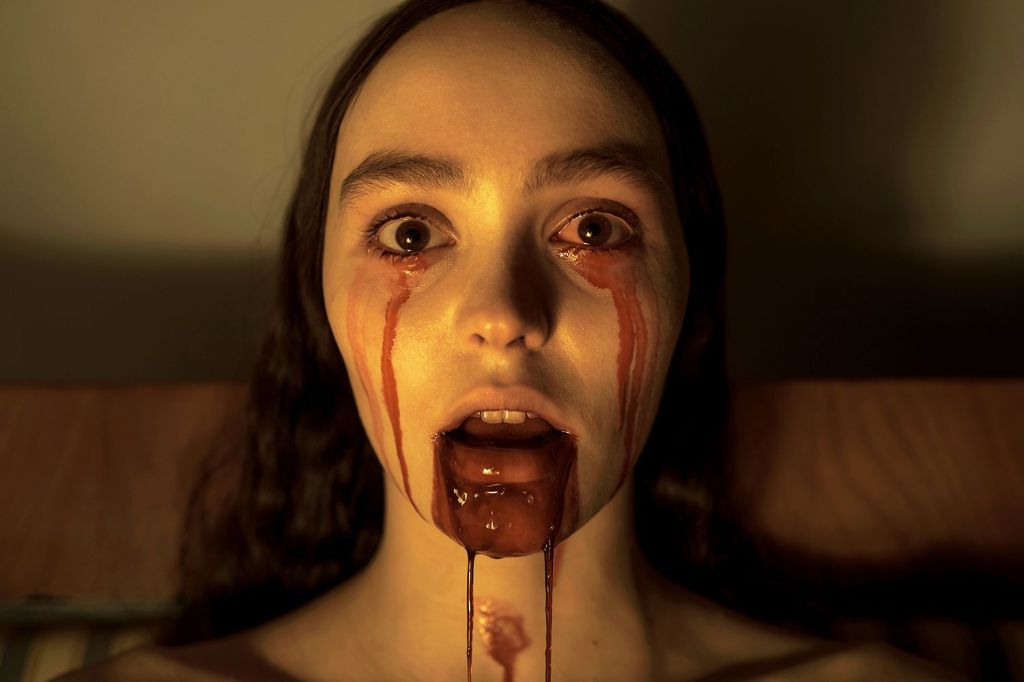
Lily-Rose Depp in Nosferatu.
Everyone- audiences and critics alike – seemed to adore Robert Eggers’ recent version of Nosferatu, but I must confess it left me bored. It looks beautiful, with a painterly touch homaging the German Expressionism of the 1922 F W Murnau classic. But it feels reductive, style over substance with little new to add.
Lily-Rose Depp as Ellen pouts and pants her way through like a porn star, and, when she isn’t doing that, is having seizures, and merely sucks her cheeks in like her famous father Johnny in Sleepy Hollow, not one of his better films. Her co-star Nicholas Hoult fares little better, reacting rather than acting. As a gory romp, it’s okay, but not terribly original.
The problem seems to be the source material itself. This genre of horror is so familiar, even to non-aficionados, that we’re left with those ubiquitous tropes of gloomy, misty locales in twilight, lusty maidens in period costume, and the grotesque count. They’ve become cliches, easy to parody.
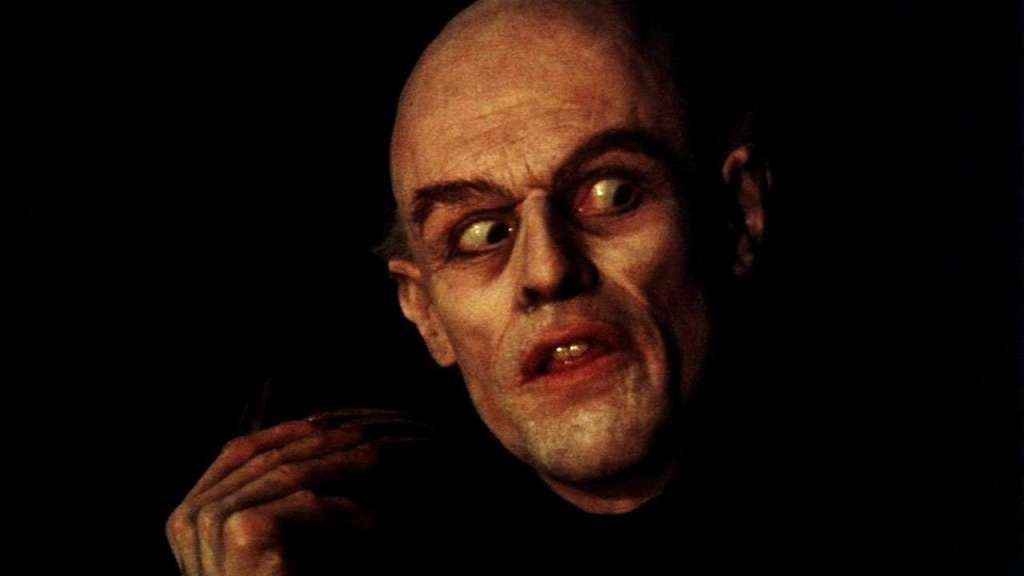
Willem Dafoe in Shadow of The Vampire
Count Orlok, aka Nosferatu, is the antithesis of glamorous vampires such as Christopher Lee and Gary Oldman (when in suited gentleman mode) – an outsider with hideous features, claws and a capricious nature. He is beast, predator, the shadow side of the psyche, the dusty, lurking figure of childhood phantasmagoria. He’s a cipher in a sense, a totemic symbol of evil that is represented as poisonous outsider in fairytales. He does not swoop or glide down in a cape, undercover of night; rather, he creeps and lurches. He pounces like some feral creature stalking its tiny prey.
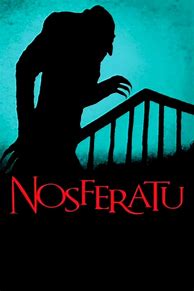
Murnau’s 1922 Nosferatu.
Perhaps that’s why he endures as a cultural phenomenon. Orlok is the ultimate villain – the closest in (almost) human form to spiders, snakes, crocodiles, vermin, etc. He’s the primordial shudder that we try to ignore. We would rather not go there.
I must confess to not having seen David Lee Fisher ‘s frame by frame remake from 2023. But them again, not many have. Perhaps it’s because the original is such a masterpiece of suspense, light and shadow, wonderfully paced and terrifyingly acted by Max Shrek. It seems untouchable.

David Lee Fisher ‘s version.
E Elias Merhige’s 2000 film, Shadow of The Vampire, is excellent, a fictionalised account of filming the Count, with Willem Dafoe as Shrek. He portrays him as a kind of dangerously unhinged madman who took the method acting bit too far, biting his leading ladies and sleeping like a bat. It manages to be at once an insightful look into the film studio ‘s pandering to the star system, and a satirical critique of such egotism. It’s very atmospheric and with witty, arched brow moments.

Isabelle Adjani and Klaus Kinski in Nosferatu the Vampyre
What of the risk taker’s approach to the Nosferatu tale? Leave it to European auteur nonpareil Werner Herzog, whose 1979 film Nosferatu The Vampyre is absolutely wonderful. Ye gods, it’s such a bleak film. Lead Klaus Kinski, who famously clashed with Herzog many times, makes a truly unnerving Orlok, cadaverous and otherworldly. The whole film has a sickly, bleached out palette, as though drained of blood. Here, it’s like everything is infected, and rats scurry across the ground as bells ominously chime.
The whole effect in Herzog’s world is a curious ennui, an all-encompassing malaise that feels like a portent of the plague. Isabelle Adjani as Lucy is ethereal, delicate as a wisp of smoke but somewhat foreboding. In a way, it makes sense that it was released in the postpunk era, as it feels very gothic, in all senses of the word. Bela Lugosi’s dead, long live Nosferatu.
 Hit The North