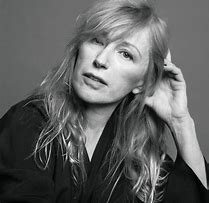
Claire Beaven’s film for Arena, which focuses on one of American contemporary art’s true trailblazers, photographer and film maker Cindy Sherman, is absolutely fascinating. Because Sherman still remains camera -shy when not in one of her (in)famous disguises, there are older, rare interviews interwoven into the film, and a nice updated voiceover from Sherman (with brief interjections from her parrot, Mr Frida.)

As befits an artist who has embodied so many characters through her performance art styled untitled self portraits, the documentary is divided into various chapters. Whether Hitchcock blonde; porn star, rock star, fashion model, shy teen, housewife, diva, clown, actor, muse, victim or Renaissance goddess, she’s played with stereotype and archetype since the seventies, with her work only getting darker and more complex and disturbing.
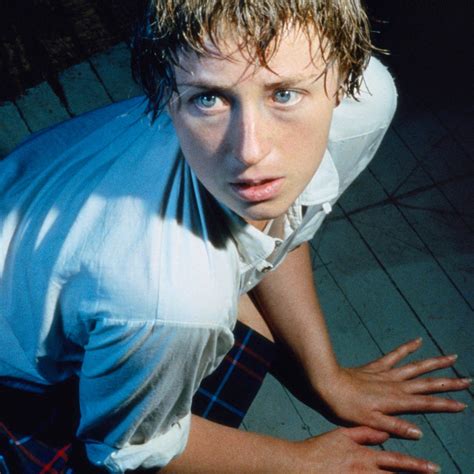
She refuses to mellow, even when on Instagram. It makes sense, as in many ways, her work pre -dates the selfie. She’s always been pretty punk too, refusing to make fashionable work, even when sponsored by fashion chains. One company sent clothes she deemed so frumpy that she deliberately applied grotesque wigs and masks while wearing their outfits. The company, suffice to say, refused to use the stills.
Having studied film and stills photography at Buffalo State College, her work had always been perceived by her lecturers as fully -formed. Influences came predominantly through European cinema, TV and advertising, where Sherman observed that the women exuded a kind of “blankness”. She rails against the vanity of sleeping in curlers, or wearing corsets and impractical high heels: ” You had to endure pain to be beautiful. I hated that”.
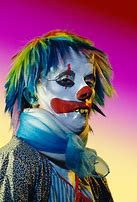
Insread, her make-up was about danger, disturbing narratives, of something going on with her heroines just outside the frame. There was always a sense of trying to escape, transcend, become bigger, new, or just emboldened. There was a need to disrupt and subvert beauty, hence her prosthetics, ugliness, cracks showing in make-up, and “vomit landscapes” in the eighties. In one interesting scene, she shows drawers stuffed with fake noses, false teeth, and eyeballs.
She speaks of her need to forge new identities as a child: “I think the reason I developed this into an art form is… I would get dressed up whenever I was depressed or confused about things… I would just go off into my room and become somebody else”.
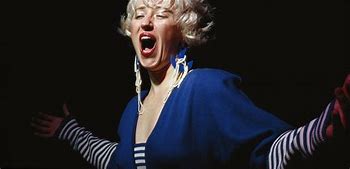
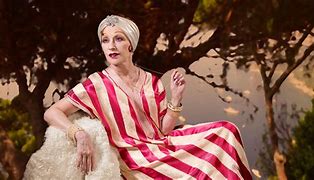
Films like La Jetee, Rear Window and Psycho had huge effects on her as a young girl, “film more so than visual art in many ways”. She’s all about the subtext, and only getting more enigmatic with age.
As with all the best art, it’s up to the individual to decide who Sherman really is underneath the wild disguises. It’s all part of her allure. But both, it seems, are wearing well. No Dorian Grey areas here.
 Hit The North